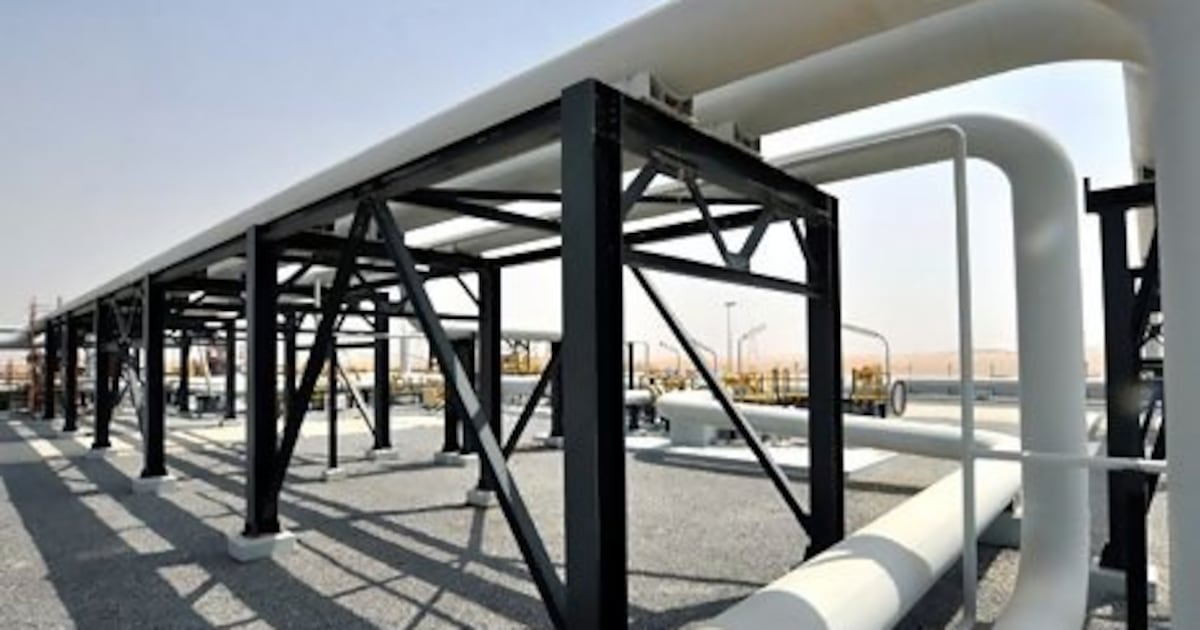

The UAE’s strategicexpansion of the Habshan–Fujairah crude oil pipeline, slated for completion by 2027, represents a pivotal economic maneuver to fortify the nation’s energy sovereignty and global market position. By doubling export capacity through Fujairah, the project mitigates vulnerabilities tied to the Strait of Hormuz—a critical choke point for global oil flows—while enhancing the emirate’s role as a logistics hub. This infrastructure upgrade is not merely an operational adjustment but a calculated investment in long-term revenue diversification, ensuring UAE crude remains a resilient export even amid geopolitical or logistical disruptions. The initiative also underscores a broader sovereign capital deployment strategy, where state entities like Adnoc are leveraging capital reserves to build redundant supply routes, thereby reducing exposure to external shocks and aligning with national aspirations to balance fiscal stewardship with energy dominance.
The business implications of this pipeline expansion are profound, extending beyond volume increases to redefine competitive dynamics in the Middle East energy sector. For businesses reliant on secure energy supply chains, the UAE’s infrastructure pivot reduces reliance on volatile maritime routes, offering a strategic safeguard against price volatility and geopolitical tensions. Sovereign capital, managed through entities like Adnoc, is positioned to catalyze further investments in complementary infrastructure—such as digital monitoring systems or hybrid energy storage solutions—which could spur ancillary markets. Regionally, this project may attract venture capital interest in energy tech startups focused on pipeline optimization, real-time logistics analytics, or alternative transport mechanisms, as governments and private entities seek to capitalize on the elevated stakes around hydrocarbon security. The expansion’s emphasis on energy reliability also signals a maturation of the UAE’s policy framework, where energy infrastructure is increasingly treated as a strategic asset akin to sovereign wealth asset allocation.
Regionally, the pipeline upgrade cements Fujairah’s emergence as a linchpin in Gulf energy networks, with ripple effects on infrastructure investment across the MENA corridor. As the UAE accelerates its production capacity targets to five million barrels per day by 2027, the need for robust export infrastructure becomes a regional imperative, prompting neighboring states to reassess their own energy logistics frameworks. For investors, the project highlights opportunities in regional infrastructure development, particularly in storage, refining, and port operations, where private equity and sovereign-backed venture funds may converge. The pipeline’s success could also amplify the UAE’s appeal as a hub for CLEAN hydrogen or green energy projects, exploiting its existing export infrastructure to transition toward diversified energy exports. In this context, sovereign capital is not just financing a pipeline but investing in a narrative of energy transition that prioritizes security, resilience, and strategic foresight—principles that will likely resonate across the MENA region in the coming decade.