
Washington’s tactical pivot toward areluctant Iranian interlocutor, signaled by the dispatch of Vice‑President Vance to Islamabad, carries immediate reverberations for capital allocation across the MENA region. Sovereign wealth funds in the Gulf are recalibrating exposure to Iranian‑linked assets, while private‑equity and venture capital firms are reassessing risk premia tied to tech ecosystems that rely on seamless maritime flow through the Strait of Hormuz. The prospect of a de‑escalation, albeit tentative, has prompted a cautious re‑prioritisation of assets toward projects that enhance regional connectivity and resilience.
Institutional investors are channeling unprecedented liquidity into digital infrastructure, clean‑energy clusters, and logistics corridors that underpin the next wave of MENA‑centric growth. Sovereign funds such as the Public Investment Fund of Saudi Arabia and the Abu Dhabi Investment Authority are accelerating stakes in satellite networks, AI‑enabled financial services, and green‑hydrogen pilots, betting that post‑conflict realignment will catalyse a shift from hydrocarbons to knowledge‑based industries. Venture capitalists, meanwhile, are targeting early‑stage startups specialising in supply‑chain digitisation and carbon‑capture technologies, seeking upside in markets that will benefit from diversified financing structures.
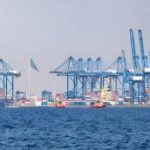
The broader infrastructural agenda reflects a dual imperative: bolstering physical gateways—ports, rail links, and cross‑border energy pipelines—to insulate the region from geopolitical shock, and reinforcing digital frameworks that attract foreign direct investment. Governments are fast‑tracking megaprojects like NEOM and the Red Sea gateway, integrating them with emerging fintech hubs to create an end‑to‑end value chain that aligns with global ESG expectations. This integrated approach is reshaping the investment narrative, positioning the Gulf as a conduit for re‑routed trade flows and a magnet for high‑margin, technology‑driven enterprises.
Looking ahead, the convergence of diplomatic overtures and market‑driven imperatives will dictate the tempo of sovereign‑backed capital deployment. The alignment of strategic timelines among the United States, Israel, and Iran will hinge on the ability of regional financiers to fund resilient infrastructure while navigating an evolving risk landscape. Institutional players that can synthesize macro‑political insight with granular venture metrics are poised to capture outsized returns, steering the MENA economies toward a more integrated, technology‑centric growth trajectory.