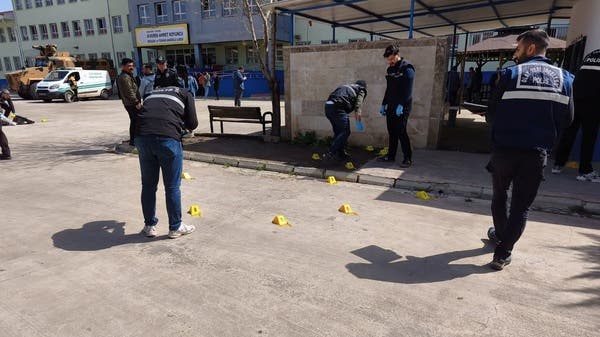

The recentschool shooting in Turkey, while tragic, underscores a broader regional security vacuum that investors and sovereign wealth managers in the Middle East and North Africa can no longer afford to ignore. As episodic violence rises amid fragile education systems, sovereign funds are compelled to allocate additional resources toward public safety infrastructure, including advanced surveillance networks and emergency response protocols, to safeguard critical assets and maintain investor confidence.
Venture capital ecosystems across the Gulf and North Africa are experiencing pressure to diversify beyond traditional sectors such as oil, gas, and fintech. The heightened focus on socio‑political stability is accelerating capital flows into resilient infrastructure—smart‑city platforms, integrated logistics hubs, and AI‑driven risk‑management tools—thereby reshaping the M&A landscape and prompting more aggressive fund deployment strategies anchored in sovereign‑backed capital.
Governments in the region are leveraging sovereign wealth pools to finance large‑scale public‑security upgrades, from biometric border controls to AI‑enabled crowd monitoring in urban centers. This infusion of capital not only bolsters national resilience but also creates a fertile environment for private‑sector partnerships, enabling VC firms to co‑invest in next‑generation security technologies that are increasingly viewed as essential for sustainable economic growth.
Consequently, the interplay between sovereign capital, venture investments, and infrastructure development is poised to redefine the risk‑reward calculus for the MENA region. Stakeholders must navigate an evolving paradigm where security imperatives directly influence capital allocation decisions, shaping the trajectory of both private and public sector strategies for the foreseeable future.