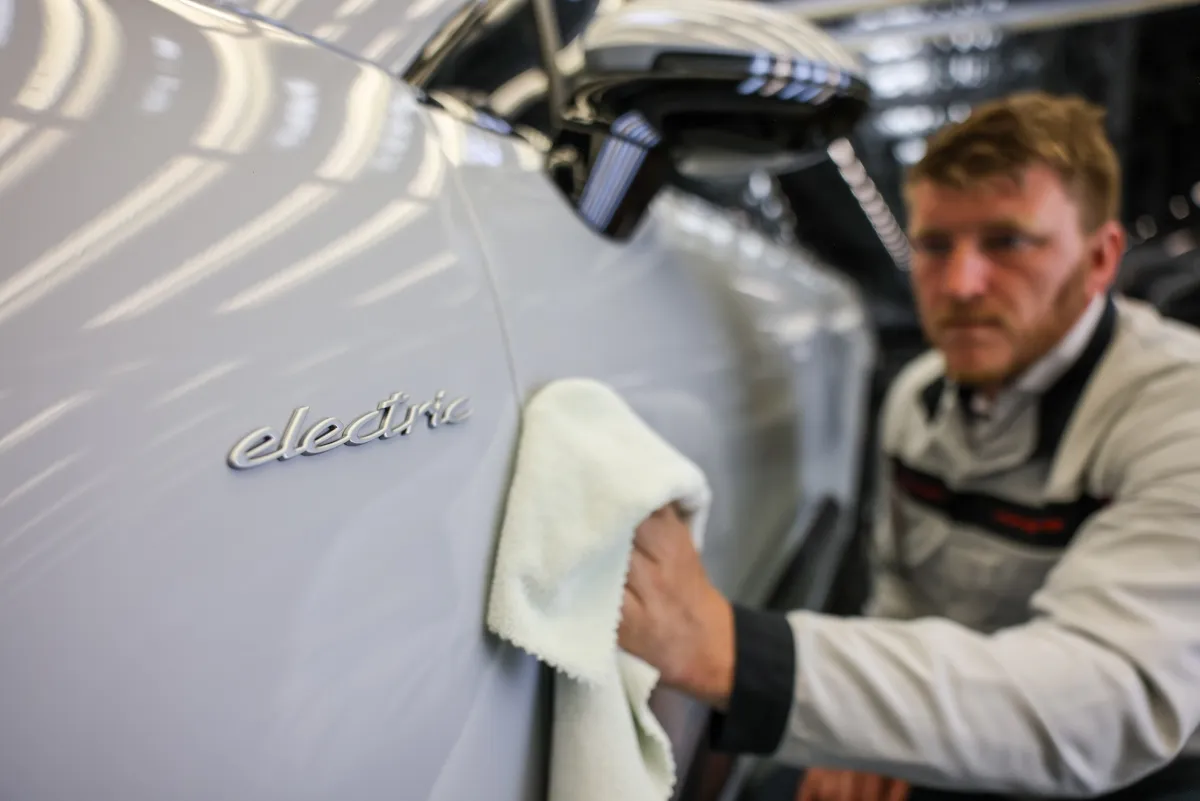

Porsche’sstrategic restructuring, marked by the closure of three subsidiaries—including Cellforce Group, its battery-focused division—reflects a broader recalibration of its business model in response to declining sales and profit pressures. This move, driven by the adoption of a “technology-open powertrain strategy,” signals a fundamental shift in the automaker’s approach to electrification and innovation. For the Middle East and North Africa (MENA), this has significant implications for sovereign capital allocations and venture capital flows. MENA’s position as a growing hub for automotive and tech investments could be reshaped by Porsche’s retreat from in-house battery R&D, which may divert strategic capital toward alternative partnerships or regional ecosystems offering scalability. The decline in Porsche’s EV competitiveness alongside delayed product launches, such as the Macan Electric, underscores vulnerabilities in global automakers’ transition to electrification, a trend that could influence regional investment priorities toward more mature or collaboratively developed technologies rather than experimental ventures.
The decision to shutter Cellforce Group, which had been positioned as a cornerstone of Porsche’s EV differentiation, exemplifies a tightening of global supply chains and a preference for optimized, externally sourced solutions. In the MENA context, this could accelerate the need for sovereign funds and institutional investors to diversify their portfolios beyond traditional automotive manufacturing into areas such as battery technology partnerships or infrastructure development. Sovereign capital in the Gulf and North Africa has increasingly targeted tech-linked projects, from smart cities to renewable energy integration. Porsche’s pivot might prompt regional authorities to accelerate investments in localized EV infrastructure or battery manufacturing capabilities to fill gaps created by international players scaling back in-house capabilities. Additionally, the volatility in Porsche’s MENA market performance—compounded by falling sales in North America and China—serves as a cautionary tale for regional investors evaluating long-term bets in high-growth but volatile sectors. The automotive and tech landscapes in MENA will need to adapt swiftly to such shifts to remain attractive for sovereign and institutional inflows.
The restructuring also offers a lens through which to assess venture capital dynamics in the region. MENA’s VC ecosystem, which has seen robust activity in fintech and mobility sectors, may now face reduced opportunities for partnerships with legacy automakers pivoting away from core EV R&D. However, this could create untapped potential for startups focusing on niche technologies, such as battery recycling or second-life battery applications, which align with Porsche’s new strategy. The shutdown of Porsche eBike Performance and Cetitec highlights risks for startups deeply embedded in legacy automotive supply chains, particularly in North Africa’s nascent tech sectors. Conversely, the move may stimulate VC interest in agile, scalable solutions that align with Porsche’s “open powertrain” framework, such as software-driven mobility platforms or modular battery ecosystems. For MENA’s VC firms, the lesson is clear: diversification across both legacy and emerging players is critical. The region’s ability to bridge gaps left by such strategic retreats—through innovations in tech-enabled mobility or sustainable energy—will determine its attractiveness for future capital investment.
Regionally, Porsche’s decision underscores the urgency for MENA to strengthen infrastructure that supports sustainable mobility and tech innovation. As global automakers reassess their in-house capabilities, MENA’s infrastructure investments in EV charging networks, semiconductor fabrication, or R&D parks could gain prominence. The region’s unique position as a crossroads of global supply chains and a growing consumer market for EVs makes it a potential hub for reallocating automotive production or battery innovation. Sovereign capital here may pivot toward initiatives that reduce dependency on external partners, such as localizing EV manufacturing or fostering public-private partnerships in tech infrastructure. However, without coordinated policy frameworks, the region risks missing opportunities to capitalize on the global shift toward shared infrastructure models. Porsche’s recalibration thus serves as a timely reminder for MENA to align its infrastructure and investment strategies with global decarbonization trends while safeguarding against over-reliance on single-market or single-industry dynamics.*