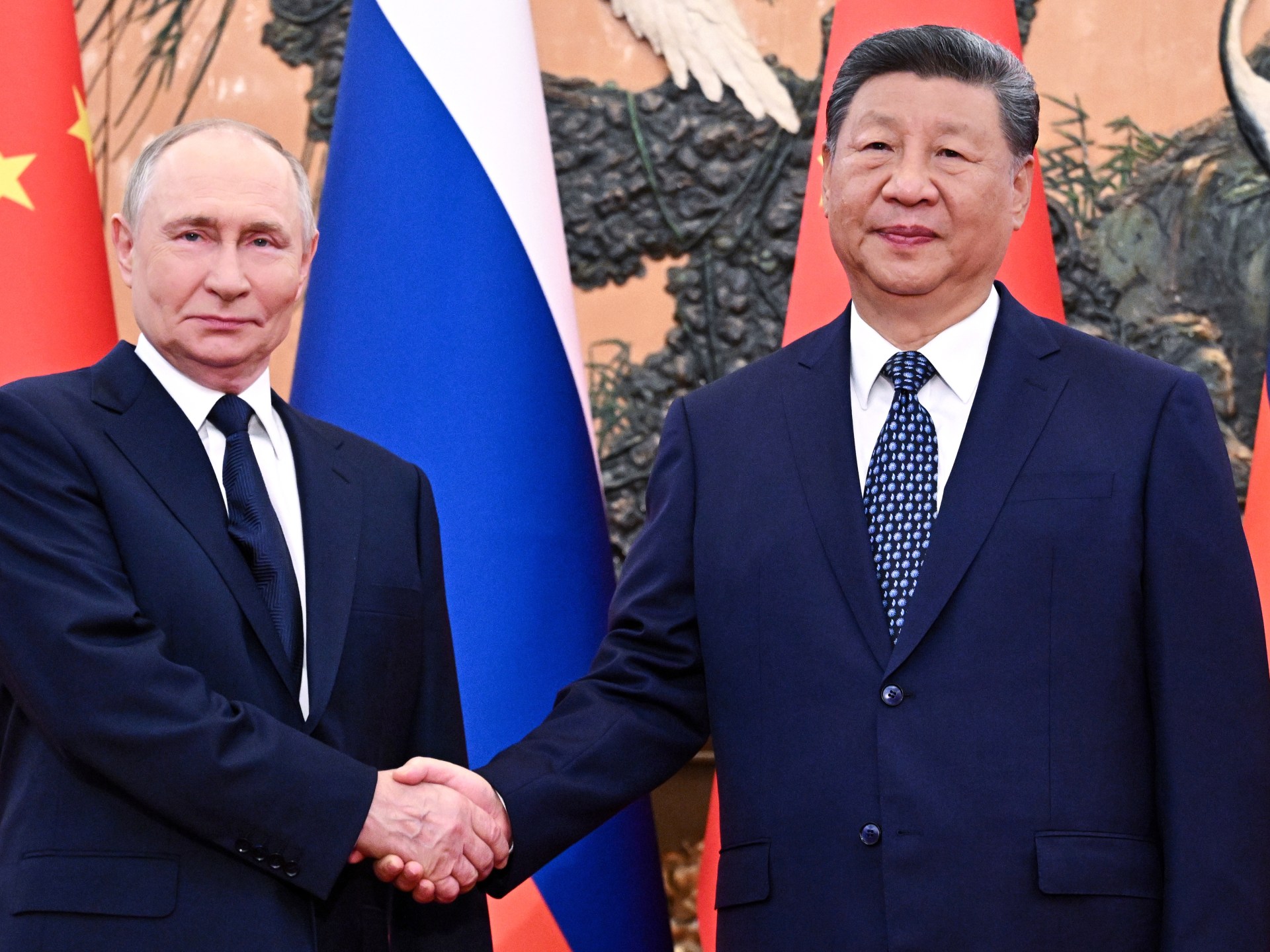

Russian President Vladimir Putin’s impending state visit to Beijing underscores a pivotal shift in global economic order that carries profound implications for the Middle East and North Africa. As Moscow and Beijing pledge to deepen their “comprehensive partnership,” the convergence of Russian energy resources and China’s industrial capacity threatens to reshape regional power dynamics across MENA. With Saudi Arabia, the UAE, and Qatar actively diversifying their energy export markets beyond traditional Western beneficiaries, the Russia-China axis presents both opportunity and uncertainty for a region increasingly dependent on securing alternative revenue streams amid waning American influence.
The economic ramifications extend directly into sovereign capital strategies across the Gulf Cooperation Council. Saudi Arabia’s Public Investment Fund and the UAE’s ADIA are likely reassessing their exposure to Western financial systems as Moscow and Beijing advance de-dollarization initiatives. Concurrently, China’s role as Russia’s primary trading partner—facilitating transactions in dual-currency arrangements—sets a precedent that Gulf sovereign wealth funds may emulate to preserve portfolio stability while maximizing returns in an increasingly fragmented global economy.
Infrastructure financing emerges as the most consequential vector for MENA business development. China’s Belt and Road Initiative, now operating in tandem with Russian energy transit corridors, offers alternative financing mechanisms to traditional Western multilateral banks. This parallel system threatens to marginalize institutions like the European Bank for Reconstruction and Development, whose projects in Egypt and the Levant may face competitive pressure from Moscow-Beijing backed alternatives. Regional technology adoption also accelerates as Russian-Chinese tech cooperation potentially bypasses Western suppliers, fundamentally altering procurement decisions for telecommunications, transportation, and smart city initiatives throughout the Gulf and North Africa.
The venture capital landscape faces unprecedented disruption. MENA’s startup ecosystem, currently receiving billions in Western funding, must now navigate competing geopolitical spheres of influence. Chinese-Russian support for indigenous technology sectors could catalyze regional innovation clusters, yet simultaneously fragment the investment environment that has attracted global institutional capital. For MENA economies banking on knowledge economy transformation, this multipolar tech supply chain presents both the challenge of reduced interoperability and the opportunity to develop truly independent technological sovereignty.