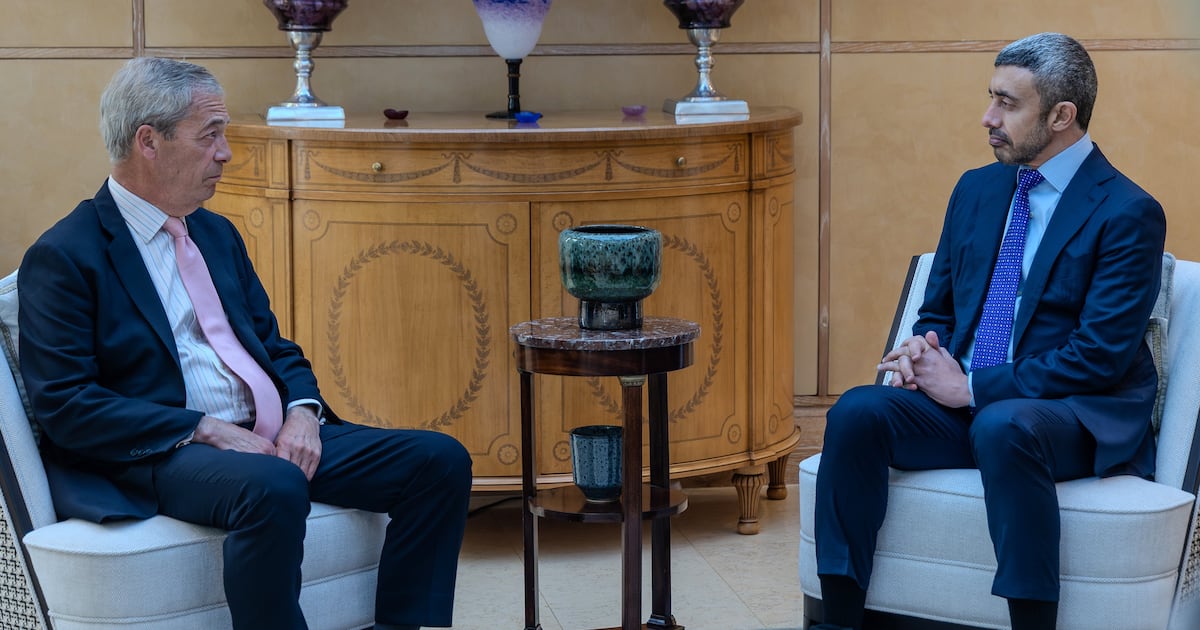

Sheikh Abdullah binZayed’s high‑profile engagements in London underscore the UAE’s deliberate leveraging of sovereign capital to deepen strategic partnerships, particularly with the United Kingdom. By convening with senior political figures such as Nigel Farage and National Security Adviser Jonathan Powell, the Emirati leadership is positioning Abu Dhabi’s investment vehicles—most notably the Abu Dhabi Investment Council and its sovereign wealth fund arm—to co‑invest in high‑value sectors, ranging from renewable energy to advanced manufacturing, thereby reinforcing the country’s role as the pre‑eminent conduit for Gulf capital into Europe.
The diplomatic outreach coincides with a heightened emphasis on regional security following Iran’s missile and drone campaign against civilian UAE infrastructure. This escalation has prompted a recalibration of sovereign risk assessments across the Gulf, encouraging the mobilization of sovereign funds to underwrite reconstruction and resilience projects that directly support the nation’s broader Vision 2031 economic diversification agenda. The implicit message to British investors is that the UAE is prepared to back resilient infrastructure and critical‑technology ventures, thereby creating a low‑risk, high‑return environment for sovereign‑backed private equity and venture capital vehicles.
For the broader MENA region, these diplomatic and financial dynamics signal a pivotal shift toward a more integrated, capital‑intensive development model. The UAE’s capacity to marshal sovereign wealth, coupled with its growing venture ecosystem—exemplified by the expansion of fintech accelerators in Dubai and Abu Dhabi—sets a precedent for other Gulf states seeking to attract foreign direct investment into infrastructure‑heavy sectors such as ports, rail, and renewable energy grids. This, in turn, enhances regional connectivity and positions the Middle East as a strategic hub for global supply chains, potentially unlocking multi‑billion‑dollar flows from European and Asian sovereign investors.
Consequently, the meeting’s outcomes are likely to translate into concrete financing mechanisms—joint sovereign‑fund ventures, blended finance structures, and targeted VC pipelines—that will accelerate the rollout of next‑generation infrastructure across the Gulf and wider MENA, reinforcing the UAE’s status as the region’s primary conduit for sovereign capital and as a catalyst for broader economic integration.