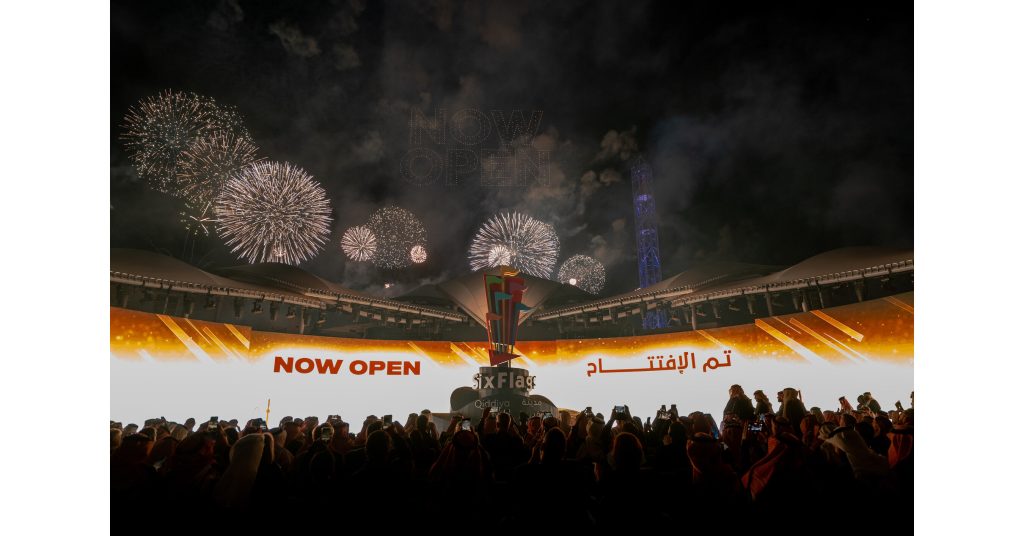

The opening of Six Flags Qiddiya City represents the most significant sovereign wealth-backed entertainment infrastructure bet in the Middle East’s modern history. The $1 billion-plus investment, channeled through the Public Investment Fund’s subsidiary Qiddiya Investment Company, signals a deliberate pivot from passive hydrocarbon wealth accumulation toward active destination-building that competes for global tourism capital. This is not merely a theme park opening—it is a proof of concept for sovereign wealth funds seeking to deploy patient capital into tourism development at a scale that traditional private sector financing cannot match.
The business implications extend far beyond the park gates. Saudi Arabia’s target of 17 million annual visitors by 2030 would position Qiddiya City alongside Disney’s tier-one destinations, fundamentally altering the competitive dynamics of regional tourism. Dubai and Abu Dhabi have spent two decades establishing the Gulf as a leisure destination; Riyadh is now entering that market with a differentiated value proposition anchored by record-breaking attractions like Falcon’s Flight, the world’s tallest and fastest rollercoaster. The 325,000 jobs projected across the broader Qiddiya development represent a meaningful contribution to domestic employment diversification, a critical political and economic imperative for a kingdom where youth unemployment has historically posed structural challenges.
From a venture capital and private markets perspective, the Qiddiya model carries profound implications. The integration of a globally recognized Western entertainment brand—Six Flags—under sovereign ownership demonstrates a new template for emerging market tourism development, one that bypasses the gradual organic growth path followed by competitors. Other Gulf states and MENA nations with similar diversification ambitions will closely monitor attendance trajectories, per-capita spending metrics, and international visitor mix as indicators of replicability. The success or failure of this model will shape sovereign wealth investment appetite across the region’s entertainment and hospitality sectors for years to come.
The strategic calculus is clear: reduce oil dependency, capture domestic entertainment spending that currently leaks to European and North American destinations, and establish Riyadh as a global tourism hub. What remains to be seen is whether world-class infrastructure alone can overcome the cultural and regulatory factors that have historically limited international travel to the kingdom. The 2019 introduction of tourist visas marked a pivotal policy shift, but sustained international visitor growth will require ongoing reform momentum. For now, Six Flags Qiddiya City stands as the most tangible evidence that Vision 2030’s economic transformation is no longer theoretical—it is operational, capitalized, and open for business.