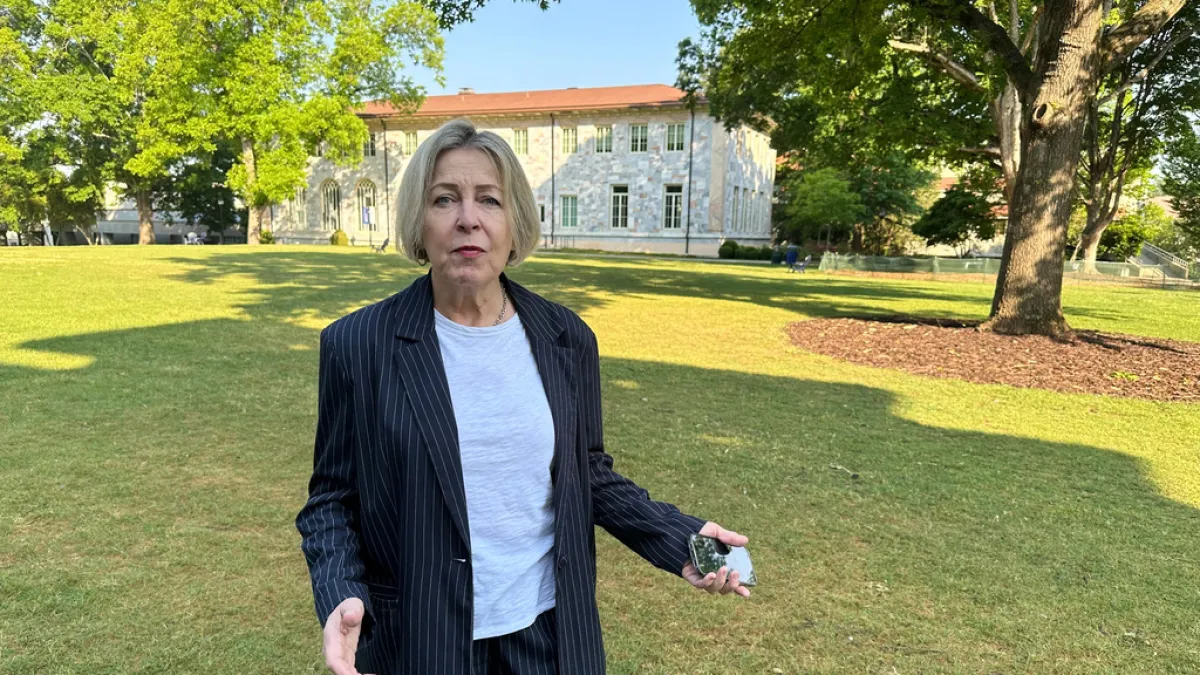

The lawsuit filed by three Emory University professors against their institution underscores mounting tensions between academic freedom and institutional risk management—tensions that resonate far beyond a single U.S. campus protest. While centered on constitutional and civil liberties, the case has broader implications for how global institutions, including those in the Middle East and North Africa (MENA), navigate politically charged discourse. As sovereign wealth funds and public-sector entities in the region increasingly invest in Western higher education—through endowments, research collaborations, and satellite campuses—the precedent set by such litigation may influence future capital allocation decisions. Universities seen as suppressing dissent could face reputational risks that deter strategic partnerships or philanthropic investments from MENA-based entities attuned to both human rights narratives and geopolitical sensitivities.
In parallel, venture capital activity across the MENA region has begun to reflect these evolving social dynamics. With deepening interest in edtech and digital learning platforms, particularly within Saudi Arabia’s Vision 2030 framework and UAE’s knowledge economy strategy, institutional stakeholders are placing greater scrutiny on governance frameworks and freedom of expression indices. The Emory lawsuit could serve as a cautionary tale for startups and scale-ups receiving foreign investment, especially those operating virtual campuses or collaborating with Western academic brands. Sovereign-backed investors, notably from Abu Dhabi and Riyadh, are likely to factor in_environmental, social, and governance (ESG) considerations linked to free-speech climates when evaluating joint ventures or cross-border acquisitions in the global education sector—an emerging frontier in regional economic diversification strategies.
The ripple effects also touch infrastructural ambitions aimed at positioning the MENA region as a new nexus for international scholarly collaboration. Initiatives such as Egypt’s New Administrative Capital and Morocco’s Mohammed VI Polytechnic City highlight state-led efforts to build purpose-built academic zones designed to attract top-tier global universities. However, incidents like the one at Emory introduce market uncertainty, forcing policymakers and regulators in the region to reconsider alignment protocols tied to institutional neutrality and political non-interference. Should legal outcomes favor heightened administrative control over student activism—as outlined in Emory’s updated expression policies—such precedents may dissuade forward-thinking host governments from emulating open academic models essential to long-term innovation ecosystems. This recalibration carries weight for venture syndicates investing early-stage capital into higher education infrastructure projects throughout the GCC and Levant economies.