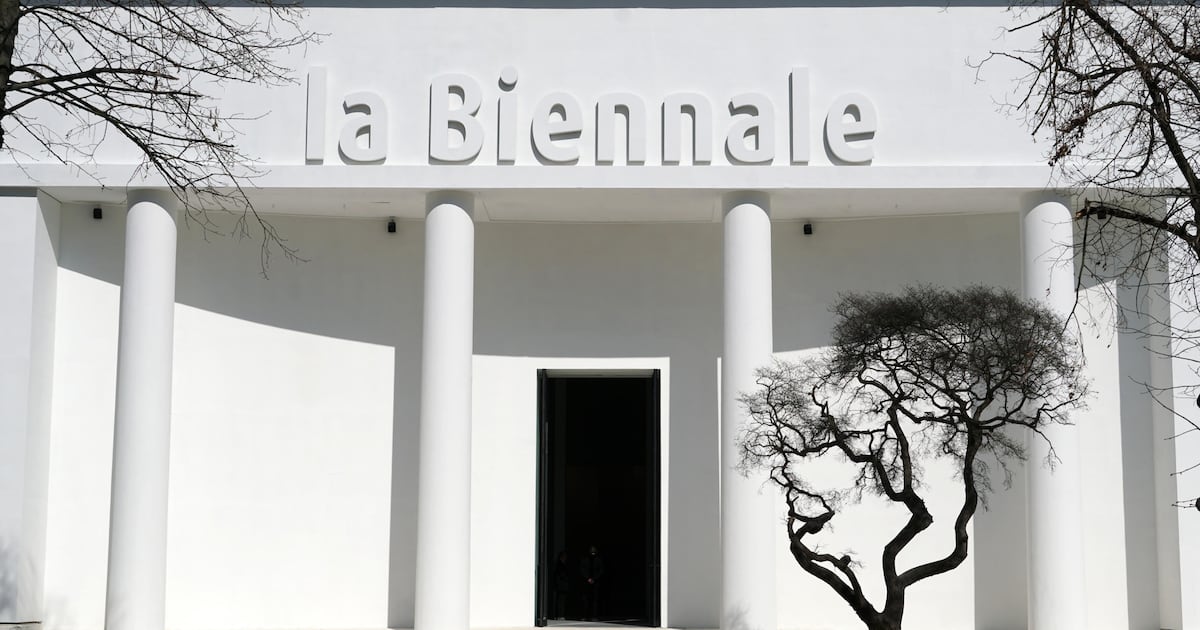

The 2026 Venice Biennale’s five-member jury, led by Brazilian curator Solange Oliveira Farkas and including Elvira Dyangani Ose, artistic director of the sovereign-backed Public Art Abu Dhabi Biennial, ruled on Thursday to exclude Russian and Israeli pavilions from consideration for top prizes, citing the International Criminal Court’s outstanding crimes against humanity charges against the two countries’ leaders: Russian President Vladimir Putin, wanted by the ICC since 2023 over the alleged unlawful deportation of Ukrainian children, and Israeli Prime Minister Benjamin Netanyahu, subject to a 2024 ICC arrest warrant over alleged war crimes in Gaza. This decision marks an inflection point in MENA’s expansion of soft power influence over global cultural governance, a strategic pillar of regional sovereign wealth funds’ (SWFs) long-term economic diversification agendas away from hydrocarbon dependence. The ruling applies to Russia, returning to the Biennale for the first time since its 2022 invasion of Ukraine, and Israel; the jury’s full membership includes Zoe Butt, Marta Kuzma and Giovanna Zapperi alongside Farkas and Dyangani Ose.
MENA SWFs, including Abu Dhabi’s ADIA, Mubadala and Saudi Arabia’s Public Investment Fund, have deployed more than $220bn in cultural and creative infrastructure across the region since 2020, per SWF Institute data, with anchor projects such as Saadiyat Island’s cultural cluster, AlUla’s heritage district and the Grand Egyptian Museum driving adjacent venture capital activity in art fintech, experiential retail and creative SMEs. The inclusion of a senior Abu Dhabi cultural official on the Biennale’s top jury signals the region’s transition from cultural capital importer to policy setter, a shift that reduces competitive pressure for global soft power spend as Russian and Israeli pavilions are sidelined, improving risk-adjusted returns on MENA’s cultural sovereign allocations. The jury’s statement explicitly linked nation-state actions to artist representation, a framework that aligns with MENA regulators’ push to standardize cultural investment compliance frameworks to attract institutional capital.
The ruling comes as the European Commission moved this week to withdraw a €2mn ($2.3mn) grant to the Biennale over Russia’s participation, exposing geopolitical risks in European cultural institutions that are driving more VC and sovereign co-investment to MENA’s more stable cultural hubs. Israel’s 2024 pavilion closure by artist Ruth Patir in protest of the Gaza war further underscores this volatility, accelerating capital allocation to the region. MENA-focused creative sector VC funding hit a record $1.1bn in 2025, up 68% year-on-year per Magnitt, with 40% of deals tied to infrastructure-adjacent tech including digital art platforms and cultural district management systems. The Biennale’s decision also bolsters the positioning of 2026 Arab pavilions from the UAE, Egypt and Palestine, all backed by sovereign or quasi-sovereign capital, as priority partners for global institutional investors seeking exposure to the region’s cultural growth story.
Broader geopolitical tensions are reshaping talent and diaspora engagement with MENA’s creative ecosystem, highlighted by the reinstatement of Lebanese-born artist Khaled Sabsabi to Australia’s 2026 pavilion after a backlash over his past works depicting Hezbollah leader Hassan Nasrallah. Sovereign-backed incubators in the UAE and Saudi Arabia allocated more than $400mn in 2025 to repatriate MENA creative talent, a pipeline that supports the long-term viability of regional cultural infrastructure investments. As the Biennale prepares for its May 9 to November 22 run of the In Minor Keys exhibition under the posthumous curatorship of Koyo Kouoh, the first African woman to lead the main international exhibition following her 2025 death, MENA institutions are cementing their role as the world’s most stable, well-capitalized growth driver for the global cultural economy.