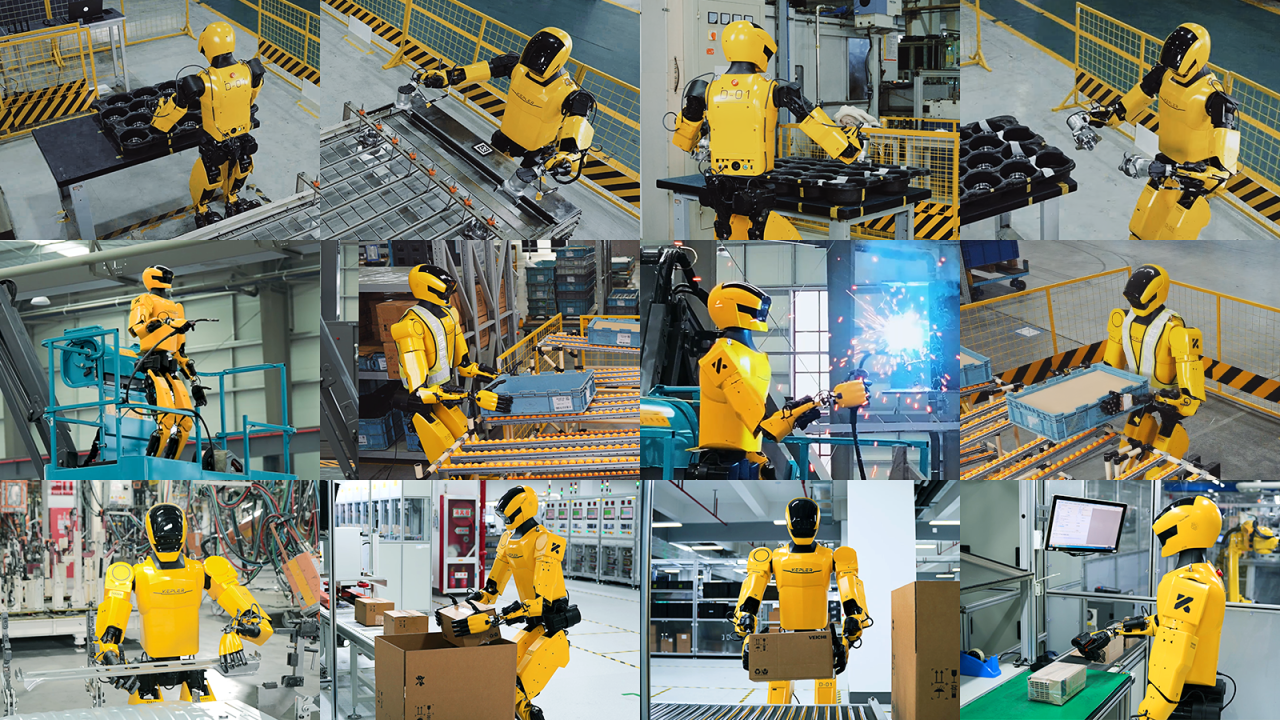

Kepler Robotics’ successful closing of a 100‑million‑yuan A++ round, led by SAIF Partners and backed by strategic investors Nuoli Intelligent Equipment and Shenzhen Minbao Optoelectronics, signals a decisive shift in the MENA region’s approach to embodied intelligence. The infusion will be directed toward three pillars—augmenting VTLA force‑tactile data acquisition, building an international network of physical‑interaction datasets, and commercializing industry‑specific data services. By concentrating on data and model capabilities, Kepler is positioning itself to become a key supplier of end‑to‑end sensory solutions for industrial robots, a sector that the GCC and North African governments are earmarking for accelerated digitisation under their sovereign wealth funds and smart‑city initiatives.
From a sovereign‑capital perspective, the round presents a new avenue for regional state‑backed funds to invest in high‑value digital infrastructure that transcends traditional manufacturing. The planned 10‑million sample dataset and native VTLA models could provide the data backbone for future autonomous warehouses, construction robots, and logistics hubs across the Gulf Cooperation Council, directly aligning with the Vision 2030 mandates of Saudi Arabia and the UAE. The partnership model that Kepler is pursuing—exporting data and model capabilities to industry players—offers a scalable framework for public‑private collaboration, enabling governments to rapidly upgrade local industry clusters without the prohibitive costs of in‑house R&D.
For venture capital, Kepler’s pivot to a full‑stack force‑tactile solution provides a compelling return‑on‑investment thesis. The company’s technology, validated in automotive, electronics, and logistics factories with demonstrable production‑in‑carfing gains, positions it as a high‑growth prospect for mid‑stage funds active in the MENA tech ecosystem. The strategic inclusion of SAIF and other Asia‑focused investors also signals a growing appetite for cross‑regional capital flows, inviting regional VCs to consider contingency stakes in companies that can bridge Eastern manufacturing expertise with Western market access.
Infrastructure implications are equally pronounced. The deployment of Kepler’s exoskeleton‑based tactile feedback system necessitates robust data pipelines, high‑bandwidth edge computing nodes, and secure cloud storage—capabilities that the Gulf and North African smart‑city projects are concurrently developing. By embedding advanced sensor suites into industrial robots, Kepler is effectively creating a new layer of digital infrastructure that can be leveraged for predictive maintenance, quality control, and workforce augmentation. This, in turn, accelerates the region’s transition to a knowledge‑based economy, reinforcing the strategic importance of sovereign wealth funds, venture capital, and public‑private partnerships in driving sustainable industrial growth.