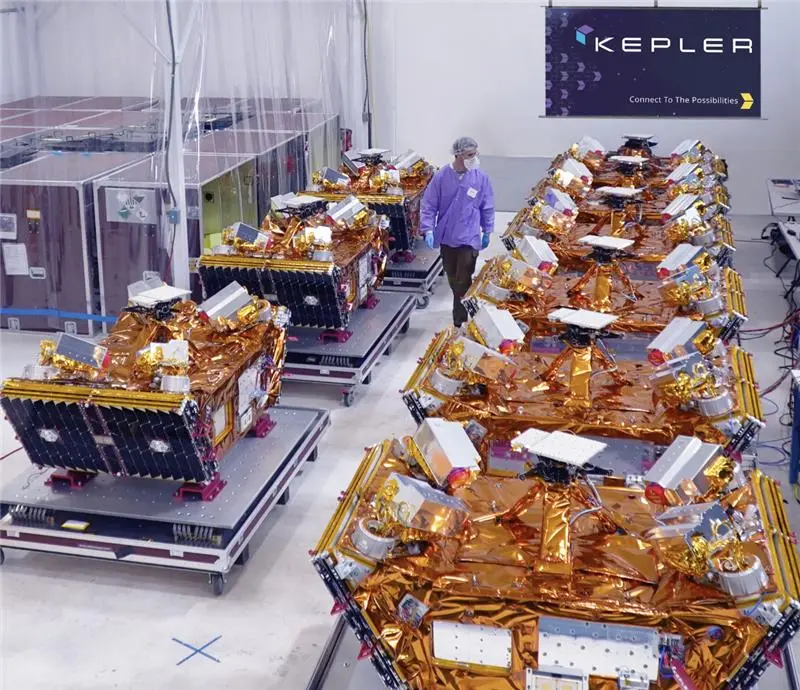

The MENA financial landscape is undergoing a pivotal transformation as sovereign entities and institutional investors intensify their focus on the technological imperatives driving regional digital economic strategies. Within this context, the discussion around space-based computing cannot be separated from broader sovereign capital flows, venture capital cycles, and the strategic development of regional infrastructure. The recent deployment of compute clusters such as the Kepler Communications project underscores a tangible shift—in this sector, the tangible assets are increasing not in the form of satellites brimming with consumer-grade GPUs, but rather in the capacity to process and manage orbital data effectively.
The launch of Kepler’s constellation with approximately 40 Nvidia Orin edge processors demonstrates a calculated move toward integrating edge computing within the space domain. This development marks a significant departure from mere bandwidth provision, emphasizing the necessity for localized processing to mitigate latency, regulatory pressures, and energy cost constraints. As governments and institutions recognize the strategic value, the infusion of sovereign capital is accelerating the maturation of space-based information services, making it increasingly clear that the ecosystem is moving beyond theoretical applications toward commercial viability.
Venture capital’s role in this paradigm has expanded, with investors targeting startups like Sophia Space, whose mission is to engineer networked computing layers for orbital environments. Traditional incumbents such as SpaceX and Blue Origin remain primarily focused on satellite launches and connectivity; however, the competitive frontier demands innovation in data center economics. The success of such ventures will hinge not only on technological breakthroughs but also on their ability to navigate complex geopolitics, regulatory oversight, and the energy demands intrinsic to orbital operations.
The implications for the MENA region are profound. With Vision 2030, the UAE, Saudi Arabia, and Egypt investing heavily in future-oriented digital and infrastructure projects, there arises a growing need for financial institutions and stakeholders to adapt their portfolios and risk strategies. This environment compels multinational players and regional governments to collaborate more closely, shaping not just market dynamics, but the very architecture of economic development across the North Sea, the Gulf, and beyond.
In conclusion, while the hype surrounding orbital data centers captures public imagination, real value is being generated through strategic capital deployment, regulatory foresight, and the development of robust regional infrastructure. The coming decade will be defined by how these forces coalesce, determining the long-term structural shift in the global economic order—one where technological leadership is inseparable from political, investment, and capital strategy in the MENA and broader Middle East region.