
Sudan’s ongoing civil war has reached a strategic inflection point following the defection of RSF commander General Al Nour Ahmed Adam, whose resignation marks both a tactical blow to the paramilitary’s cohesion and a symbolic acknowledgment of the Sudanese Armed Forces’ (SAF) growing influence. While this shift is unlikely to decisively alter battlefield dynamics, it underscores the fracturing of RSF leadership—a critical vulnerability for a force that has relied on centralized command to sustain its insurgence. From a sovereign capital perspective, the defection highlights the unsustainable financial burden of Sudan’s conflict, which has already drained state reserves, crippled credit markets, and necessitated piecemeal financial support from global actors. The war’s protraction has deepened the country’s structural fiscal deficits, with estimated $10 billion in suspended international debt repayments and crippling inflation eroding oil revenue—a lifeline now diverted to war-churned Khartoum. Adam’s defection may marginally ease the RSF’s operational costs but does little to address the systemic insolvency plaguing both adversaries, whose reliance on looted assets and international sanctions-driven capital flight has left the economy in shambles.
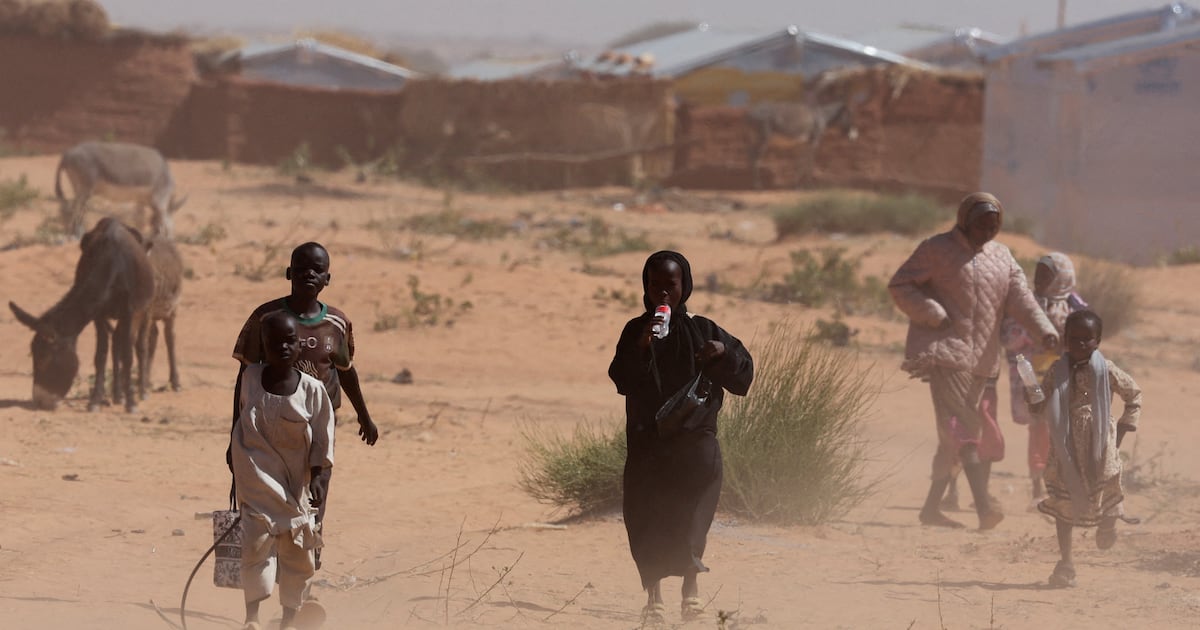
For venture capital and private sector activity, the conflict has catalyzed a historic retreat, with Sudan’s GDP contracted by 35% since 2023 and formal business activity reduced to 12% of pre-war levels. Institutional investors remain paralyzed by the risk of asset seizures, legal ambiguity, and the humanitarian collapse affecting 25 million people. However, regional governments, including Saudi Arabia and the UAE, have quietly signaled renewed interest in post-conflict reconstruction, contingent on sustained political stability. The defection of a high-ranking RSF officer could marginally ease geopolitical risks for cross-border infrastructure projects, such as the proposed $3 billion GERD dam collaboration with Egypt and the stalled $1.5 billion water-energy pipeline to Libya. Yet, sovereign political and economic reforms—absent thus far from negotiations—remain prerequisites for any meaningful resurgence of foreign direct investment or venture capital engagement.
Regionally, the defection exacerbates the geopolitical fragility of Egypt, Libya, and Chad, all of which have served as de facto transit corridors for RSF and SAF movements. Adam’s desert convoy route, which traversed these fragile states, underscores the reliance on transnational logistics networks that amplify regional spillover risks. For broader MENA infrastructure initiatives, such as the proposed Trans-Saharan railway and Gulf-linked trade corridors, the conflict represents a critical deterrent, diverting resources to militarization over modernization. Moreover, Adam’s deep operational knowledge of Darfur—a region historically resistant to centralized governance—complicates Sudan’s efforts to reassert authority over its western fringes, with potential ramifications for cross-border security cooperation across the Sahel. As the SAF refocuses its 2025 campaign on Kordofan and Darfur, the war’s human and economic toll will persist, reinforcing the region’s status as a humanitarian and economic sinkhole with limited prospects for recovery without decisive political settlement.