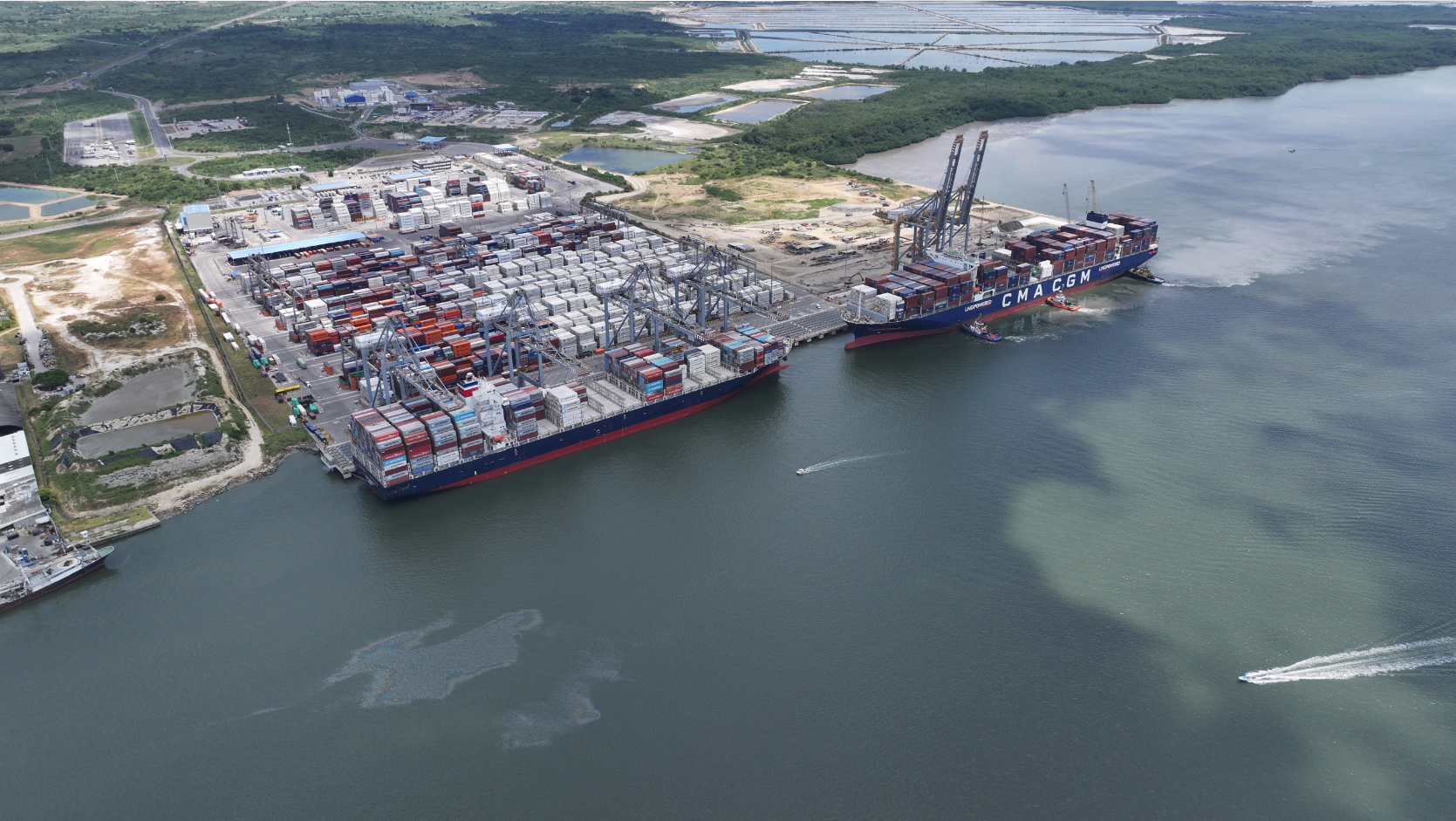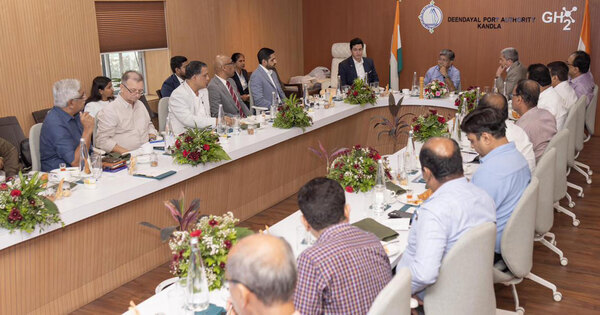

Deendayal Port Authority (DPA) chairman Sushil Kumar Singh met with DP World’s regional chief, Rizwan Soomar, to cement a partnership that could reshape maritime logistics on the Gulf of Kutch and, by extension, the broader Indo‑MENA trade corridor. The centerpiece of the talks was the Tuna‑Tekra container terminal, a $1.3 billion public‑private venture slated to lift Kandla’s handling capacity by up to 30 percent. For sovereign investors in the Gulf, the project offers a calibrated exposure to India’s fast‑growing export‑import matrix, diversifying portfolio risk while anchoring a strategic foothold in South‑Asia’s western seaboard.
Beyond the terminal, the dialogue turned to the Magrail pilot—a rail‑based freight solution designed to slash hinterland transit times by 40 percent and cut logistics costs by an estimated $150 million annually. The technology, already piloted in the UAE’s rail‑logistics hubs, promises a seamless link between Kandla and inland corridors that feed the GCC’s petro‑chemical clusters and the Levant’s agribusiness supply chains. Successful rollout would not only elevate India’s port efficiency metrics to global best‑practice standards but also generate a scalable model for cross‑border rail‑maritime integration across the region.
From a venture‑capital perspective, the Tuna‑Tekra development is poised to catalyze a wave of downstream investments in terminal automation, digital twin platforms, and green‑fuel bunkering services—segments where MENA sovereign wealth funds have recently allocated over $2 billion. DP World’s involvement, underpinned by its extensive network across the Middle East, is likely to unlock co‑investment structures that blend Indian state funding with Gulf private equity, thereby accelerating capital mobilisation and risk sharing.
Strategically, the partnership reinforces India’s ambition to position Kandla as a linchpin of the emerging “South‑West Asian” logistics axis, complementing existing hubs in Jebel Ali and Salalah. The resulting uplift in cargo throughput will feed regional trade balances, enhance supply‑chain resilience, and support the GCC’s diversification agenda by providing a reliable gateway for non‑oil exports. In sum, the Tuna‑Tekra and Magrail initiatives embody a convergence of sovereign capital, venture financing, and infrastructure modernization that could redefine maritime trade dynamics across the Middle East and North Africa.