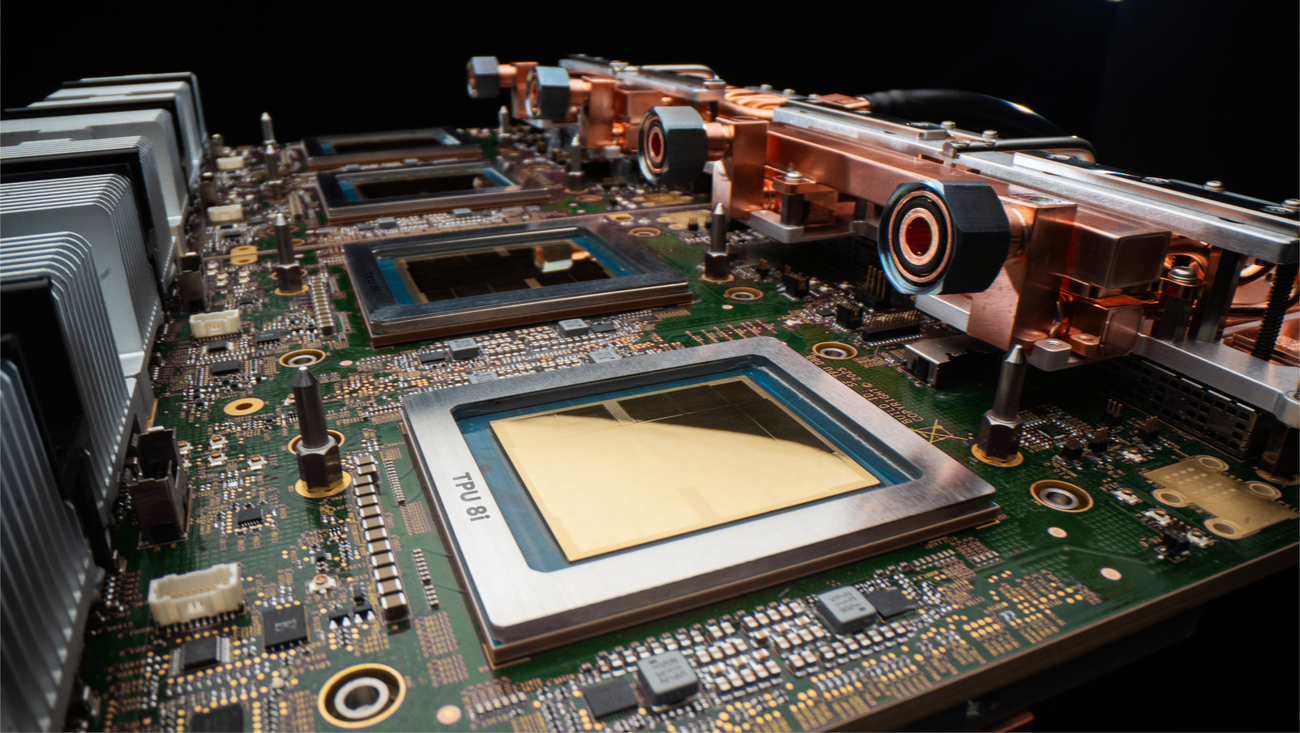

Google’s unveiling of the TPU 8t and 8i represents a significant development with potentially far-reaching implications for the burgeoning artificial intelligence ecosystem within the Middle East and North Africa (MENA) region. While the technical specifications – Boardfly topology, Virgo Network fabric, and SRAM capacity – are geared towards optimizing performance for large language models (LLMs) and trillion-parameter training, the underlying business impact centers on the accessibility and cost-effectiveness of advanced AI infrastructure. The shift to Google’s own Axion ARM-based CPU host, coupled with native support for prevalent frameworks like JAX and PyTorch, lowers the barrier to entry for regional developers and enterprises seeking to leverage generative AI capabilities, a critical factor given the current scarcity of specialized AI hardware.
The efficiency gains highlighted – up to two times better performance-per-watt compared to previous generations – are particularly relevant to sovereign capital investment strategies across the MENA region. Several nations, including Saudi Arabia, the UAE, and Qatar, are aggressively pursuing AI-driven economic diversification, often through substantial investments in data centers and cloud infrastructure. The TPU 8 series’ reduced power consumption directly addresses a key constraint in data center deployment, mitigating operational costs and improving the sustainability profile of these initiatives. We anticipate increased interest from sovereign wealth funds in partnerships with Google or other providers offering similar optimized hardware solutions, particularly as regional data residency requirements become more stringent. Furthermore, the open-source contributions, such as MaxText and Tunix, could foster a more vibrant local AI talent pool and accelerate the development of regionally-specific AI applications.
The venture capital landscape in MENA is also poised to be affected. While current investment is heavily skewed towards seed and Series A rounds for AI startups, the availability of more accessible and efficient AI infrastructure will likely attract larger-scale funding for companies focused on deploying and scaling LLMs. This includes sectors like financial services (fraud detection, algorithmic trading), healthcare (personalized medicine, diagnostics), and logistics (supply chain optimization), all of which are key priorities for regional economies. The bare metal access offered by the TPUs provides a compelling advantage for startups requiring low-latency performance, potentially shifting investment away from purely cloud-based solutions. However, the reliance on Google’s ecosystem remains a consideration for some investors seeking greater control and vendor independence.
Ultimately, the TPU 8 series underscores the growing importance of vertically integrated hardware and software solutions in the AI value chain. Google’s co-design approach, extending from silicon to data center infrastructure, sets a benchmark for efficiency and performance. For the MENA region, this translates to a greater opportunity to build competitive AI capabilities, but also highlights the need for strategic investments in regional data center infrastructure and skilled talent to fully capitalize on these advancements. The ability to efficiently deploy and scale AI models will be a key differentiator for nations seeking to establish themselves as regional AI hubs, and Google’s latest offering provides a significant, albeit ecosystem-dependent, advantage.