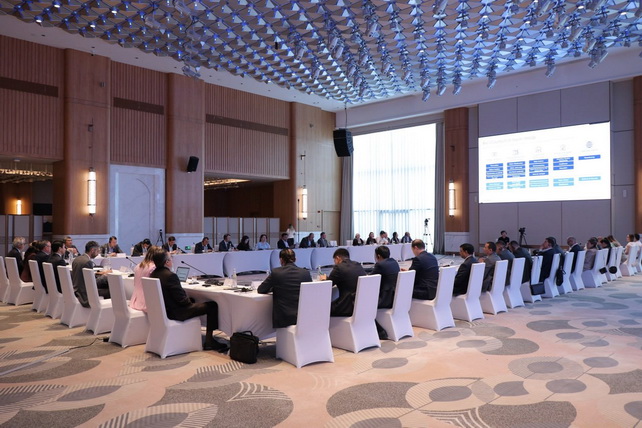

ACWA Power’s roundtable in Tashkent on insurance and reinsurance for infrastructure projects is a signal that Gulf sovereign capital is moving beyond the boardroom and into the operational risk calculus of cross-border energy deployment. As MENA-linked developers chase capacity in Central Asia and the broader post-Soviet space, the availability and pricing of reinsurance capacity has become a binding constraint—not a secondary concern. The conversation around risk-sharing tools and global economic pressures on insurance costs is, at its core, a conversation about whether Gulf sovereign wealth funds can execute at scale without absorbing untenable tail risk on their balance sheets.
What matters for the region is the infrastructure implication. Large-scale energy projects in Uzbekistan and adjacent markets demand coverage regimes that mirror the sophistication of Gulf project finance pipelines, yet local insurance markets remain underdeveloped by institutional standards. The participation of Marsh and specialized consultancies underscores that this is not a local market maturation exercise—it is an export of MENA’s risk-transfer playbook into jurisdictions where regulatory frameworks and underwriting capacity lag behind the capital commitments being deployed. For sovereign wealth vehicles and regional infrastructure funds, the gap between demand and capacity creates both risk and strategic opportunity.
The takeaway for regional capital allocators is blunt: infrastructure ambition in Central Asia will continue to be gated by the ability to package financial and operational risk into structures that international insurers and reinsurers can price with confidence. Strengthening domestic insurance and reinsurance markets is not charity—it is a prerequisite for turning sovereign capital deployments into bankable, multi-stage investment programs. The institutions that move first on this front will shape the risk-architecture for energy projects across the MENA-Central Asia corridor for a decade.