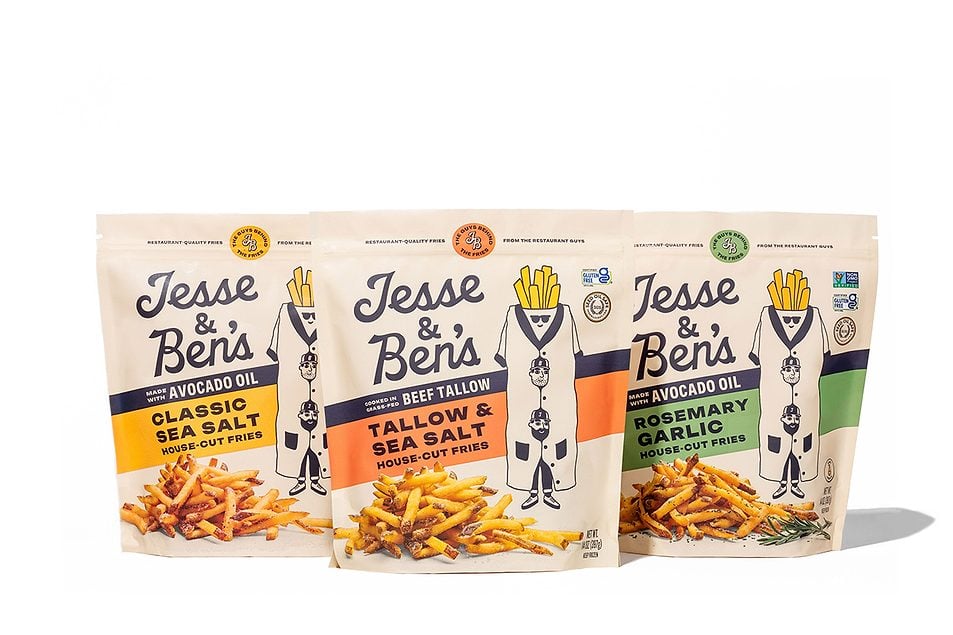

The $10 million Series A funding round secured by Jesse & Ben’s, led by Greycroft with participation from sovereign-backed and institutional capital including Rich Product Ventures, signals a deeper convergence of global venture strategies with MENA’s evolving consumer landscape. This capital infusion not only accelerates the company’s clean-label frozen fry expansion but underscores sovereign wealth funds and regional VCs increasing allocations to high-growth, health-focused CPG ventures. For MENA, this trajectory illuminates both an opportunity and a demand imperative: rising affluence and urbanization are driving demand for premium, nutritionally aware food products, yet regional infrastructural gaps in cold-chain logistics and localized manufacturing remain significant barriers to entry for similar disruptors.
The participation of mid-market and corporate venture arms—such as Rich Product Ventures—reflects a strategic recalibration where MENA sovereign capital, traditionally focused on energy and infrastructure, is exploring defensive and growth-oriented investments in consumer sectors. Regional venture capital hubs like those in the UAE and Saudi Arabia are poised to mirror such deep-tech and clean-label investment models, provided they address supply chain frictions. MENA’s sovereign-backed infrastructure initiatives, such as Saudi Industrialization Fund logistics projects or UAE’s Al Maryah Central cold-storage facilities, could theoretically anchor scalable production networks, but current capacity remains fragmented and insufficient for mass-market penetration without targeted foreign direct investment or PPPs.
Jesse & Ben’s aggressive retail penetration, including national expansions at U.S. mass-market channels, offers a blueprint for MENA region entrants seeking to compete against legacy food incumbents. The reliance on grass-fed tallow and seed-oil-free formulations directly targets affluent, health-conscious demographics in MENA, where obesity rates and diabetes prevalence are driving regulatory pressures and consumer shifts toward wellness brands. For MENA-based CPG startups, replicating this model will necessitate leveraging regional sovereign capital to forge localized supply chains—particularly in Morocco’s agri-tech zones or Jordan’s free-trade zones—while navigating stringent food safety regulations. Failure to address these infrastructure and compliance bottlenecks risks limiting MENA’s ability to capitalize on global consumer health trends, even as local VC pools grow more sophisticated. The injection of institutional capital into ventures like Jesse & Ben’s thus serves as both a catalyst and a cautionary tale for MENA’s nascent healthy-food ecosystem.