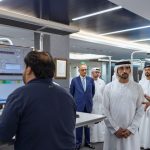
The Jebel Ali Port’s sustained operational excellence, as underscored by Crown Prince Hamdan bin Mohammed’s recent visit, underscores a transformative business impact for the Middle East and North Africa (MENA) region. By handling nearly 200,000 TEUs through multimodal corridors, the port exemplifies how strategic infrastructure investments directly enhance supply chain resilience and regional trade competitiveness. This efficiency not only bolsters Dubai’s position as a global logistics hub but also signals to sovereign entities across MENA the imperative to prioritize capital allocation toward interconnected transportation networks. The integration of rail, rail freight, and automated storage systems like BOXBAY reduces operational friction, driving down costs and accelerating time-to-market for regional and global enterprises. Such advancements position sovereign capitals to leverage these assets, fostering economic diversification while mitigating vulnerabilities in global supply chains—a critical consideration amid ongoing geopolitical and macroeconomic uncertainties.
From a venture capital perspective, the Jebel Ali Port’s technological adoption creates a fertile ecosystem for innovation in logistics and infrastructure technology. The deployment of automated high-bay systems and expanded rail capacities demonstrates a forward-looking approach that could attract investments in digital twins, AI-driven logistics management, and green transportation solutions. Investors in the MENA venture capital space would find compelling opportunities in supporting startups that provide complementary services—from customs automation to sustainable energy solutions for port operations. Moreover, the UAE’s demonstrated commitment to infrastructure modernization via sovereign capital injections sets a precedent for other MENA nations to follow, potentially unlocking cross-border private equity partnerships aimed at replicating Dubai’s logistical model. This trajectory not only amplifies local economic growth but also positions the region as a nexus for high-impact venture investments aligned with global supply chain resilience.
Regionally, the infrastructure upgrades at Jebel Ali Port offer a blueprint for MENA’s broader infrastructural transformation. The scale of DP World’s investments—coupled with the Crown Prince’s emphasis on multimodal connectivity—highlights how strategic public-private partnerships can catalyze regional infrastructure development. For sovereign actors, this signals a shift toward leveraging sovereign capital not merely for immediate economic gains but as a long-term instrument to build interconnected, future-ready networks. The port’s role as a gateway for 12,000 companies further amplifies its influence, potentially drawing foreign direct investment (FDI) and incentivizing regional countries to adopt similar frameworks. As MENA nations grapple with the dual challenge of economic diversification and technological adoption, the Jebel Ali example serves as both a model and a call to action, emphasizing that infrastructure is no longer a peripheral investment but a cornerstone of sovereign competitiveness and regional interdependence.