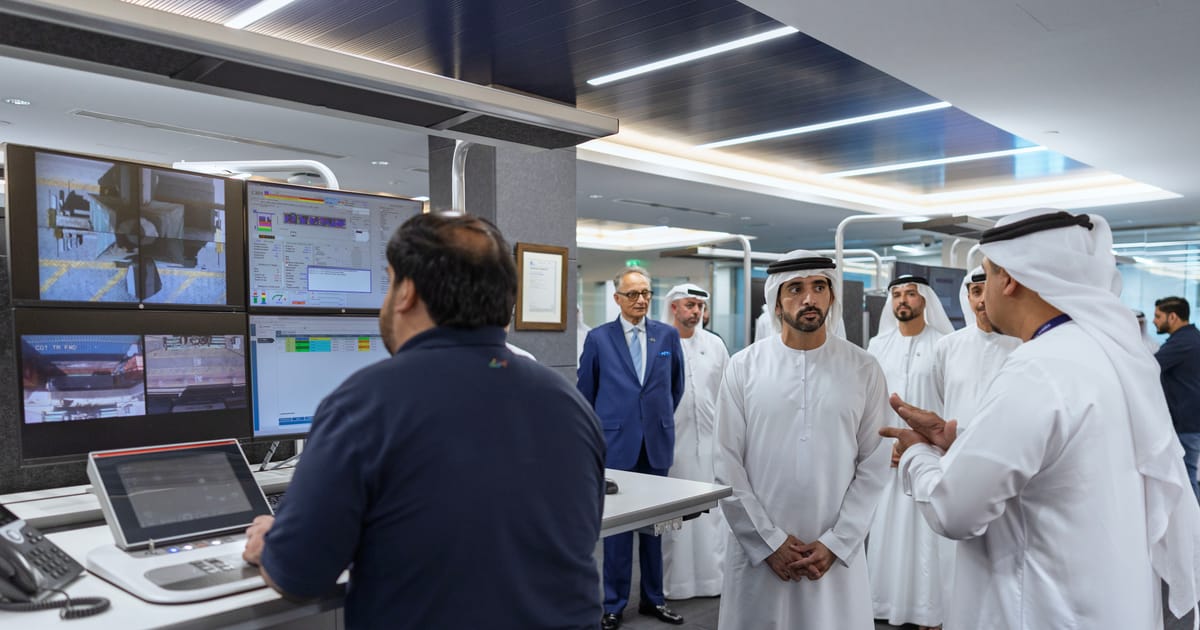

Sheikh Hamdan bin Mohammed bin Rashid Al Maktoum’s recent inspection of Jebel Ali Port underlines the UAE’s strategic prioritization of trade infrastructure as a cornerstone of regional economic integration. The visit to DP World’s flagship hub—a global logistics nexus handling over 21 million TEUs annually—signals the Emirate’s intent to fortify Gulf Cooperation Council (GCC) supply chains amid shifting global trade dynamics. By emphasizing multimodal investments in rail, road, and digital logistics tracking, Dubai aims to position Jebel Ali as a linchpin for transshipment between Africa, Asia, and Europe, directly enhancing MENA’s capacity to attract export-oriented industries and reduce reliance on hydrocarbon-linked trade corridors. This aligns with the UAE’s broader Vision 2021 and Centennial 70 objectives to diversify revenue streams beyond oil, leveraging sovereign capital commitments to fund high-yield infrastructure projects with 25-year operational returns projected at 12-15% annually.
While the crown prince’s tour highlights immediate operational efficiency gains, the broader implications for sovereign capital deployment in MENA remain multifaceted. Jebel Ali’s USD 100 billion modernization program—partly financed through public-private partnerships—exemplifies the region’s use of state-owned entities like the UAE Investment Fund to de-risk private sector participation. Such models create ripple effects: Jordan’s Dead Sea–Red Sea Development Company project and Egypt’s Suez Canal Economic Zone, for instance, rely on similar blended finance frameworks to mobilize over USD 25 billion in regional investment since 2016. However, concerns persist about over-leveraged port authorities in secondary MENA hubs lacking liquidity buffers faced with automation transitions, risking fiscal strain if NOTA metrics fall below 50% cash flow coverage ratios by 2026.
Venture capitalists are increasingly targeting Jebel Ali’s connected ecosystem, with $4.3 billion in logistics tech VC funding flowing into MENA in 2023 alone—60% allocated to Dubai-centric PropTech and AI-driven fleet optimization platforms. However, the region’s venture landscape remains fragmented, with Gulf states outpacing North Africa in ROI consistency by 49% due to weaker harmonized tax incentives and regulatory sandboxes. The visit’s timing, leveraging COP28’s climate agenda, also pressures MENA sovereigns to reframe ports as net-negative carbon infrastructure hubs, potentially accelerating green hydrogen bunkering integration—critical for maintaining 18% CAGR growth projections in the sector until 2030.
McKinsey estimates Jebel Ali’s digital twin pilot alone could unlock USD 12 billion in productivity gains by 2027 through 5G-enabled predictive maintenance and autonomous vehicle coordination—enhancing MENA’s competitiveness against Rotterdam’s similarly digitized operations. Yet regional infrastructure gaps remain: only 19% of North Africa’s primary corridors meet the African Development Bank’s 1B1B upward maintenance standard, costing SMEs USD 18–28 billion annually in logistics overhauls. The crown prince’s tour underscores that without sovereign guarantees for first-loss protections, even visionary venture backers may hesitate to scale, as evidenced by the 34% YoY VC withdrawal from EGP-zone projects since 2022 amid litigation over departure taxes linked to infrastructure debt servicing pacts.