
DP World’s inauguration of the Brazil‑Africa Link marks a strategic pivot toward a continent‑wide integrated logistics platform, poised to reshape sovereign trade flows and attract critical infrastructure investment across the MENA region. By weaving together Santos, Angola, Mozambique and South Africa, the corridor delivers a single‑point‑entry service that eliminates the fragmentation traditionally seen in trans‑Atlantic shipping. For MENA economies, the model underscores the potential of turnkey logistics frameworks to unlock export markets, creating a blueprint for sovereign entities to partner with global port operators in accelerating trade diversification.
The venture’s emphasis on animal protein, agricultural produce and consumer goods dovetails with the economic agendas of Gulf and North‑African states, where food security and industrial diversification are top priorities. DP World’s provision of 52 warehouses, a proprietary fleet of over 4,250 vehicles, and comprehensive customs and insurance services delivers end‑to‑end control, reducing the “last‑mile” bottlenecks that have hampered MENA exporters. Consequently, sovereign capital can be re‑allocated from ad‑hoc infrastructure projects toward more strategic trade corridors, while venture capitalists see a high‑growth platform with proven scalability across multiple commodity clusters.
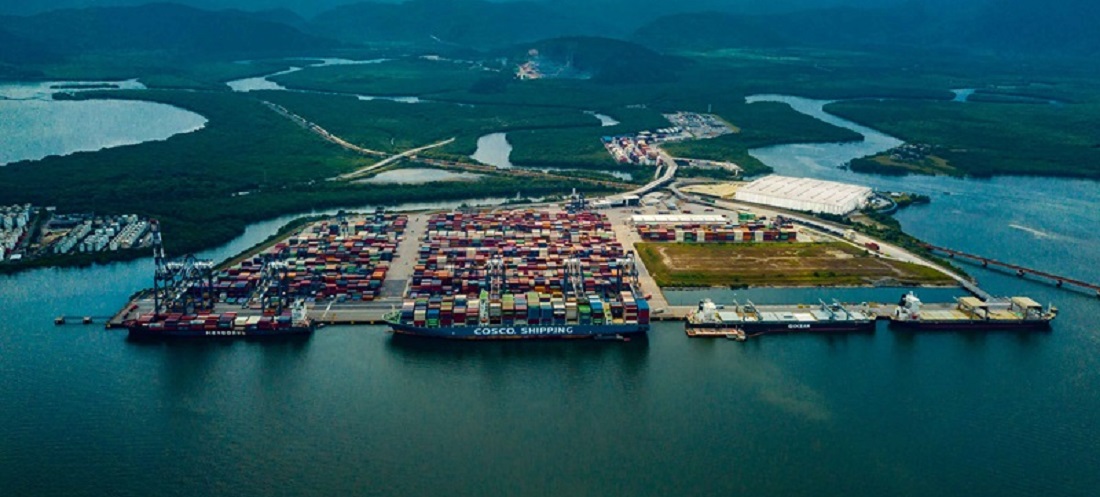
Parallel to the Brazil initiative, DP World is executing a €400 million investment cycle at the Port of Santos, expanding quay capacity to 1.7 million TEUs by 2026 and 2.1 million TEUs by 2028. The construction of a dedicated grain and fertilizer terminal, in partnership with Rumo, sets the stage for a multi‑commodity hub that rivals MENA’s own port clusters. Such large‑scale capital deployments signal to regional investors that integrated logistics nodes—combining marine, rail, and road assets—are now mainstream, offering predictable returns under a unified brand.
For MENA’s sovereign wealth entities and development banks, DP World’s integrated service model presents a commodified, low‑risk template for public‑private partnerships. It demonstrates how strategic capital can be leveraged to build resilient, multimodal networks that spur trade flow predictability and stimulate downstream industrial activity. The Brazil‑Africa Link thus signals a broader shift toward holistic, risk‑managed logistics ecosystems, poised to redefine trade dynamics across the Middle East and North Africa.