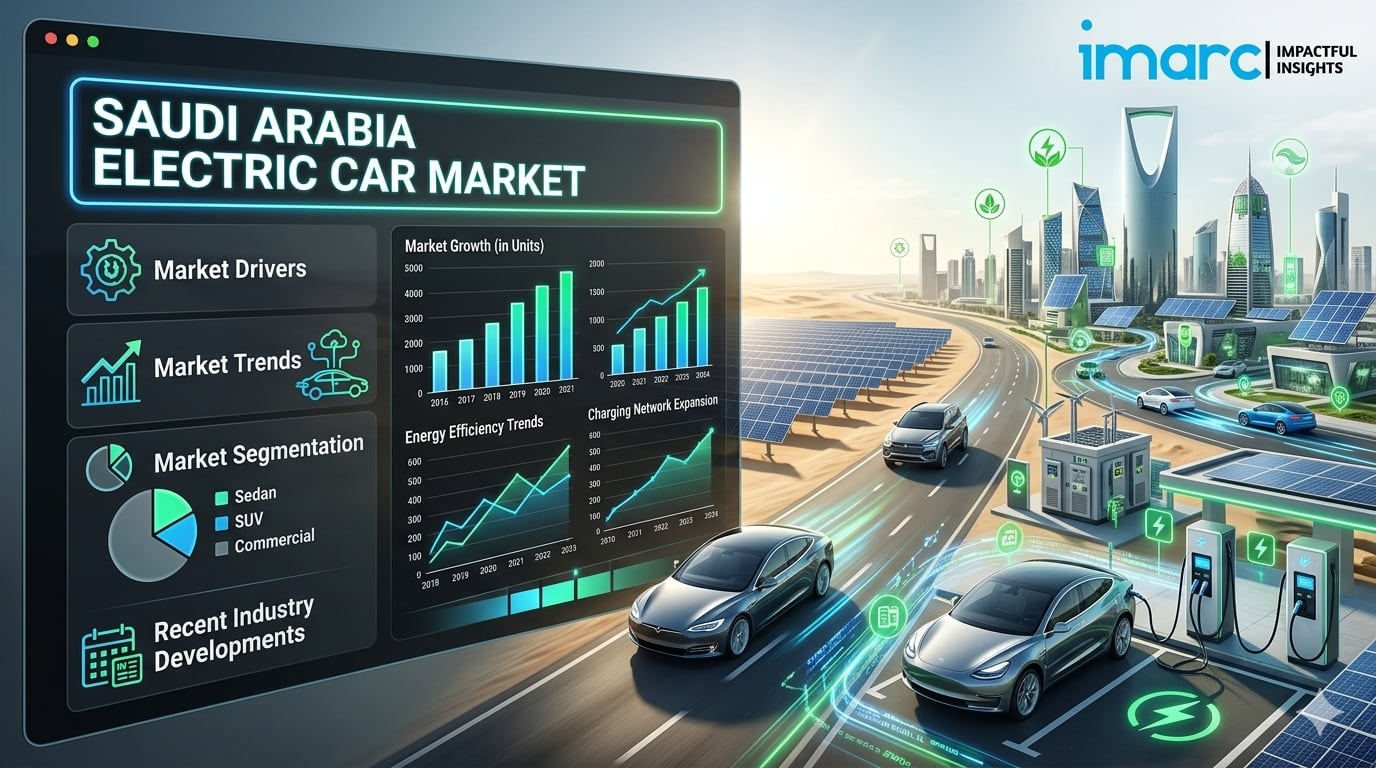

Saudi Arabia’s Vision 2030 has transformed electric‑vehicle (EV) ambition into a capital‑intensive growth engine, with the Public Investment Fund (PIF) earmarking more than US$50 billion for manufacturing, charging networks and technology partnerships through 2030. The resulting market, valued at US$1.81 billion in 2025, is projected to reach US$5.52 billion by 2034, a compound annual growth rate of 13.2 %. This trajectory is underpinned by sovereign financing of large‑scale projects such as the Electric Vehicle Infrastructure Company’s (EVIQ) plan to install 5,000 fast chargers at 1,000 sites, and the launch of domestically backed brands like Ceer Motors, whose production will begin in late 2025 with a 40 % local‑content mandate that is already generating skilled jobs and reducing import reliance.
The rapid scaling of the EV ecosystem is attracting both regional venture capital and international OEMs. Early‑stage funds are flowing into battery‑cell startups, software platforms for autonomous driving, and subscription‑based ownership models that mitigate upfront cost barriers for middle‑income consumers, who now account for 66.9 % of vehicle class sales. Meanwhile, global players—including Tesla, Lucid, BMW and GAC Motors—have secured market footholds, diversifying the product mix and driving price competition that aligns with the Kingdom’s target of 30 % electric fleet penetration in Riyadh by 2030. The convergence of sovereign backing, private‑equity risk appetite and OEM commitment is creating a vertically integrated supply chain that positions Saudi Arabia as a regional EV hub rather than a mere consumer market.
Infrastructure development is catalyzing broader economic impact. The US$191 million charging‑station market recorded in 2025 reflects a tangible pipeline of private and public spend that will underpin ancillary services, from site‑based retail to data‑analytics platforms for grid management. Moreover, the partnership between Lucid and Nvidia to embed Level‑4 autonomy, supported by the Kingdom’s Electric Vehicle Innovation Center, signals a strategic shift toward smart‑mobility solutions that dovetail with NEOM and other megaprojects. This synergy between clean energy, advanced AI, and sovereign‑driven urban planning is expected to generate multiplier effects across logistics, utilities and the emerging digital economy.
From a financing perspective, the PIF’s stake in ventures such as Lucid’s King Abdullah Economic City plant and Ceer’s joint venture with BMW and Foxconn illustrates a model of sovereign capital de‑risking that invites co‑investment from sovereign wealth funds and private lenders across the Gulf and beyond. The resulting financing mix—blending equity, mezzanine debt and export credit—lowers the cost of capital for downstream manufacturers and infrastructure operators, accelerating deployment timelines. As the market matures, the Kingdom’s ability to leverage its sovereign wealth into a self‑sustaining EV value chain will become a benchmark for diversification strategies across the MENA region.