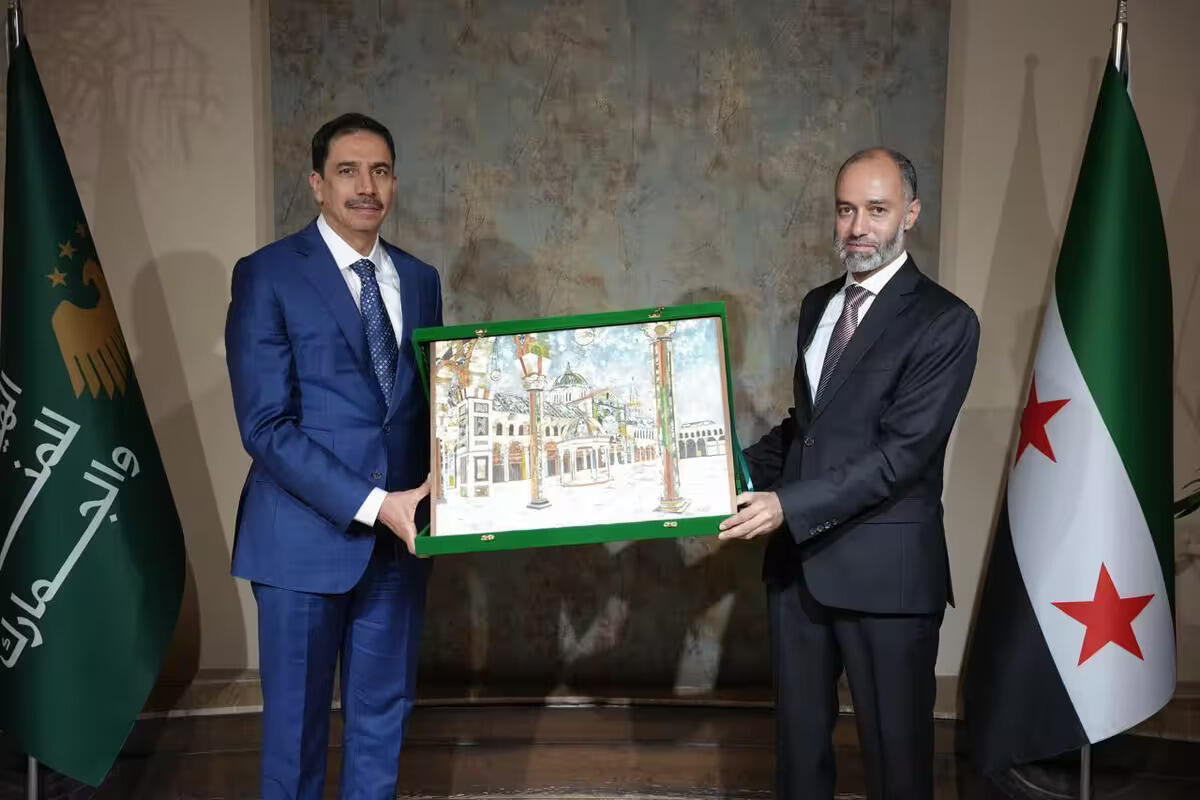

DP World’s $800 million, 30-year concession to develop Syria’s Port of Tartous represents one of the most consequential sovereign-backed infrastructure bets in the post-conflict Levant. Signed in July 2025 in partnership with Syria’s General Authority for Borders and Customs, the deal signals a significant vote of confidence in the country’s economic rehabilitation and, more broadly, in the re-emergence of once-closed trade corridors as investable, long-duration assets. For Gulf sovereign wealth and infrastructure capital, Tartous offers a template: deploy patient capital into logistics hard assets that anchor trade connectivity across Southern Europe, the Levant, and North Africa — a corridor that has historically rivaled the Suez in strategic relevance but has long been undercapitalized.
From a venture and institutional capital perspective, the Tartous project carries layered implications. DP World has committed not merely to port modernization — including expanded container handling, breakbulk and ro-ro capacity, and digitalized cargo systems — but to the development of adjacent logistics zones, inland freight hubs, and transit corridors in concert with local stakeholders. This integrated approach mirrors the playbooks that have driven returns in Jebel Ali and Sohar: anchor the investment in a deep-water maritime asset, then capture value across the warehousing, customs facilitation, and multimodal distribution stack. If executed, Tartous could become a rare example of a functioning multi-modal logistics platform in post-conflict Syria, one that attracts downstream private capital into zones that governments alone cannot finance.
The commercial signals are already materializing. UAE-Syria non-oil trade surged 132.4 percent in 2025 to a record $1.4 billion — a figure that, while modest in absolute terms, demonstrates rapid re-integration between Gulf capital pools and Syrian markets. That trajectory will accelerate if Tartous delivers on its throughput targets. For the broader MENA region, the project underscores a structural theme: infrastructure reconstruction is no longer a humanitarian narrative alone but a competitively sourced, commercially structured proposition attracting institutional-grade capital. DP World’s Levant and Egypt chief Rizwan Soomar framed it as “a defining moment,” and the language is warranted — the Port of Tartous has the potential to become a critical node in a resurgent Eastern Mediterranean trade architecture.
The strategic implications extend well beyond Syria’s borders. A modernized Tartous, integrated into DP World’s global network handling roughly ten percent of worldwide container traffic, offers shippers an alternative routing option that reduces dependency on congested chokepoints and provides landlocked parts of the Levant and Mesopotamia with more efficient access to Mediterranean transshipment. For regional infrastructure planners and sovereign allocators across the Gulf, the deal is a proof point: post-conflict corridors, backed by credible concession frameworks and Gulf operational expertise, represent a new frontier of investable opportunity — one where geopolitical risk is priced against the scarcity value of strategic maritime real estate.