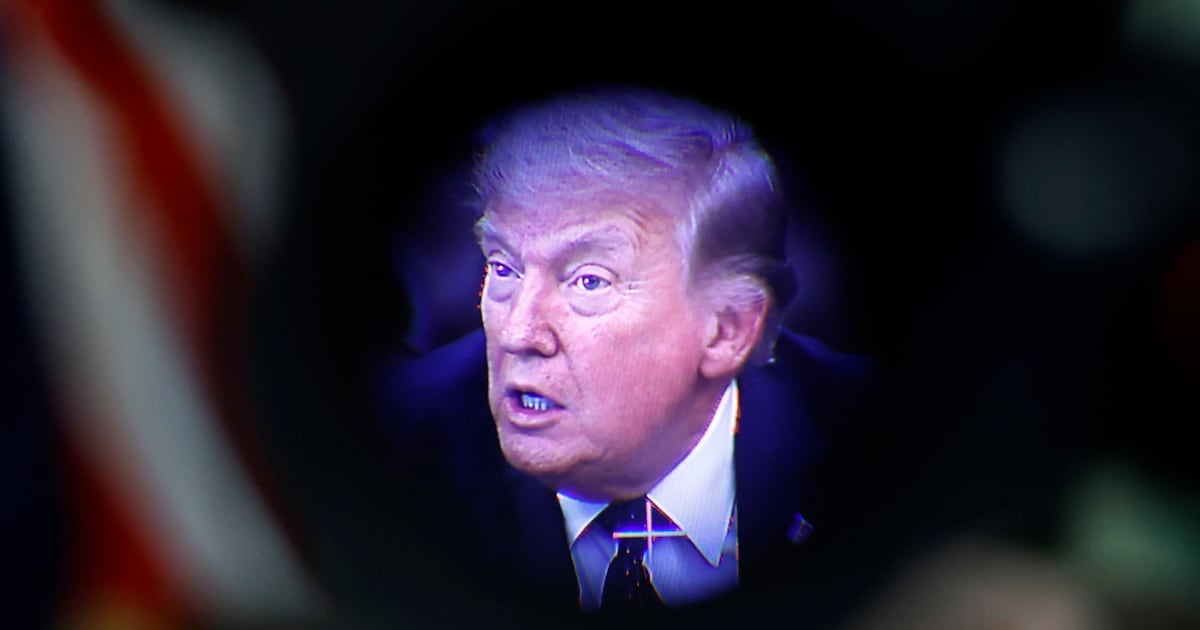

The latest AP-Norc Centre for Public Affairs Research poll data reveals US President Donald Trump’s economic approval rating has slid to 30 per cent, down from 38 per cent in March, as the escalating US-Israel-Iran conflict drives up global energy prices and domestic inflationary pressures, with only 32 per cent of Americans backing his handling of Iran. This political vulnerability, amplified by a Gallup survey showing 49 per cent of US adults now rate current economic conditions as “poor” (up from 40 per cent in March), follows a trajectory that mirrors former president Joe Biden’s mid-term approval slump following 2022 inflation spikes and public discontent over the Gaza war, and is reshaping US policy calculus toward the Middle East and North Africa. For MENA stakeholders, the conflict is no longer a peripheral geopolitical risk but a core driver of near-term fiscal and investment planning, as contradictory White House messaging on ceasefire timelines and Iran negotiations—ranging from claims of imminent deals to remarks that there is no rush to end hostilities—adds volatility to an already strained global commodity market.
Gulf sovereign wealth funds, which hold combined assets under management exceeding $4tn, face a complex trade-off as the standoff pushes Brent crude to 18-month highs: short-term fiscal buffers are bolstered by higher hydrocarbon revenues, but non-oil exporters across the Levant and North Africa are battered by surging fuel and food import costs, straining sovereign debt profiles and increasing reliance on GCC bilateral aid packages. Trump’s admission that high fuel prices will persist “for a little while” has sharpened political pressure from US consumers, driving renewed White House demands for OPEC+ to accelerate output hikes, a move that would undercut the supply discipline Gulf producers have maintained since 2020, threatening long-term sovereign revenue projections. For smaller MENA sovereigns, the risk of spillover inflation and disrupted Red Sea and Gulf shipping routes is already increasing the cost of sovereign borrowing, with J.P. Morgan’s MENA sovereign spread index widening 42 basis points since the start of April.
Venture capital flows into MENA, which reached a record $13.7bn in 2025, are facing a pullback from global limited partners spooked by the conflict’s unpredictability and US political polarization over Middle East engagements, with early-stage tech deals in the region down 17 per cent quarter-on-quarter in Q1 2026. The Trump administration’s conflicting signals on Iran negotiations—ranging from claims of an imminent deal to assertions that the conflict will drag on indefinitely—has delayed final investment decisions for flagship regional infrastructure projects, including the India-Middle East-Europe Economic Corridor (IMEC) and Saudi Arabia’s NEOM development, as contractors and financiers price in higher political risk premiums and rising input costs. Insurers have hiked rates for regional energy, logistics and tech infrastructure by up to 30 per cent since the onset of strikes, eroding the returns on billions of dollars of committed sovereign and institutional capital.
With the US midterm elections approaching in November, and Trump’s party relying on voter approval of his economic management, the White House faces acute pressure to resolve the conflict swiftly, even as it maintains rhetoric about securing a comprehensive deal to dismantle Iran’s nuclear programme. This marks a sharp reversal of Trump’s “America First” campaign pledge to withdraw the US from costly MENA entanglements, a contradiction that is further confusing institutional investors assessing regional exposure. For MENA’s economic transformation agenda, the key risk is not the conflict’s duration alone, but the erosion of institutional confidence in regional stability: Gulf sovereigns retain sufficient fiscal space to absorb near-term shocks, but smaller economies and the region’s nascent tech ecosystem remain vulnerable to capital flight and delayed infrastructure delivery if volatility persists. Institutional investors are already shifting allocations to short-duration regional debt and domestic infrastructure plays, shunning cross-border ventures until US policy signals stabilize.